Krishnamurti & the Art of Awakening

Krishnamurti Quote of the Day

Talks and Dialogues Syndey 1970 | 1st Public Talk, Sydney, Australia, 21st November, 1970

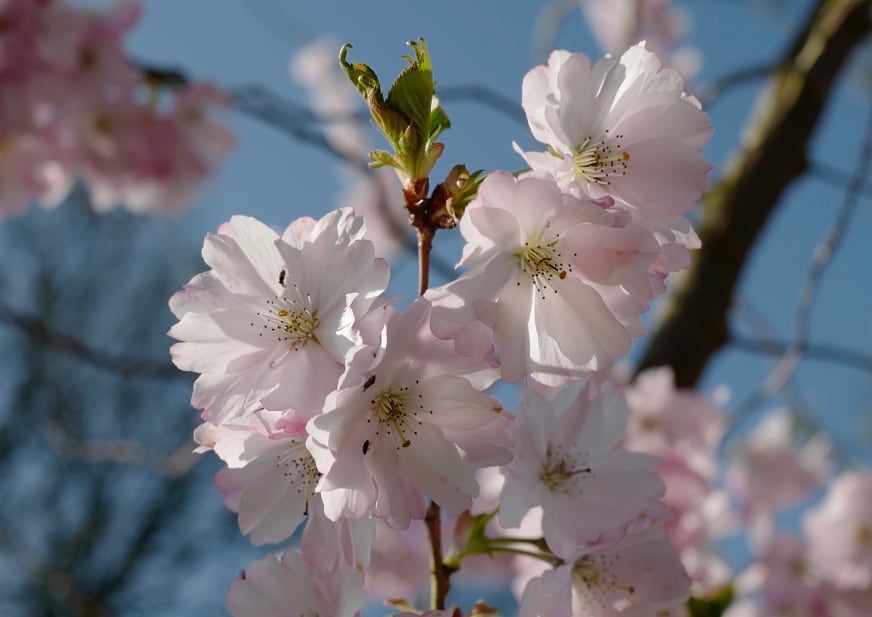
I wonder if you have ever observed anything, that is, to see things actually as they are, not as you wish them to be, or you hope they should be, but actually as they are? Have you ever observed a cloud? Have you ever observed your wife, or your husband or your friend, to see actually what is? It is not possible to observe clearly if you have a formula, if you have ideals, if you have images, if you assume you know. You can only observe with clarity, without distortion, when there is no image at all; when you look at a cloud, to look at it without the word. Do it sometime and you will see what happens when you look at something, a cloud, without a single word, or look at your wife or your husband or your friend without the image which you have built during 30 or 40 years or 10 days; just to observe.

In observation there is direct relationship, but when you have an image about her or him you are not in relationship. Surely, love is that relationship in which there is no image. So the question is, is it possible to observe oneself and the world without any distortion, without any symbol, without any formula? If you can observe it that way, then you will find action is immediate, because such observation implies that there is no division between the observer and the observed; then you are directly in relationship. To look at a tree without the botanical knowledge, without the word, then, what takes place? The word, the knowledge about that tree, separates you from the tree. There is a distance, not only physical but psychological distance, and when the psychological distance disappears there is no identity with the tree but complete cessation of this distance. After all, that is love, isn't it?

When you say to somebody `I love you', what does it mean? Is it your loving the image that you have built about her or him? All the troubles, all the misery, jealousies, irritations, pleasure - sexual and otherwise - is that what you call love?

Tags: death, love, observation

Related Quotes
So, can you, while living, vigorous, active, end your attachment, end a particular habit voluntarily, easily, quietly?
What is death? Surely, it is the complete cessation of everything that you have known
Most of us are so weighed down by the known, by the yesterday, by the memories, by the `me', the `self', which is but a bundle of memories accumulated yesterday, having no actual existence in itself.
It requires an intense energy to stand alone.
Except for the human beings, it was a new day; nothing was like yesterday.
When you lose your relationship with nature and the vast heavens, you lose your relationship with man.
We have divided life into dying and living. And this division has brought about great fear. And out of that fear we invent all kinds of theories, very comforting, may be illusory, but it is very comforting, illusions are comfortably neurotic.
We are saying: Be dead to love; it doesn't matter. Live entirely in your intellect and in your verbal manipulations, your cunning arguments.
In Asia they believe in reincarnation; that is, the believer is born over and over again until in time he becomes perfect.
Death isn't some horrific thing, something to be avoided, something to be postponed, but rather something to be with day in and day out.
One has to find out the meaning of living, not merely giving an intellectual significance to it, but looking at what it means to live.
Creativeness is not a process of becoming or achieving, but a state of being in which self-seeking effort is totally absent.
It is one fact in life, we are all going to die. That is an absolute, irrevocable fact.
It is we human beings who are always concerned about death - because we are not living.
Is death merely the ending of the physical organism? Is that what we are afraid of? Is it the body that we want to continue? Or is it some other form of continuance that we crave?
Colour was god and death was beyond the gods.
The Christians have taken comfort in the idea of resurrection, and the Hindus and the Buddhists in a future life. Future life of what?
In what manner should one live one's daily life?"
What is death, what does it mean to die? - and that is an absolute certainty that we are all going to die, and what does that mean?
It is a stupid person that wants to continue - no man who understood the rich feelings of life would want continuity.
It seems to me that our problems, whatever they are, can be dissolved totally only by burning away the process of will - which may sound completely foreign to a Western mind, and even to the Eastern mind.
That which has continuity cannot possibly be innocent.
We refuse to accept life as it is in fact.
The word 'innocence' means 'incapable of being hurt'.
Thought is the response of memory, experience, knowledge, the known, in the known is the 'me', though consciously I may not know the 'me' totally, the 'me' lives in this interval.
Do we know what love is? Never knowing it is the wonder of it, the beauty of it.
Is there time to overcome death; or is death always in harmony with life, with love, with pain; or is death something to be put far away, one day we have to face it but not now?
Can you invite death? Which means to end that which you have experienced, that which you have gathered, psychologically, so that you become totally inwardly anonymous, so that you are inwardly absolutely nothing?
Life is not what we would like it to be; life is not permanent at all.
Some people believe that the "I" has had a birth in the distant past and will continue in the future. It is irrelevant to me, it has no significance at all.
Actually we have no love; we have sentiment; we have emotionality, sensuality, sexuality
Loneliness is the awareness of complete isolation; and are not our activities self-enclosing?
It requires an intense energy to stand alone.
Try remaining with the feeling of hate, with the feeling of envy, jealousy, with the venom of ambition; for after all, that's what you have in daily life, though you may want to live with love, or with the word `love'.
Respectability is a curse;
We don't love children, because we have no love in our own hearts. We just breed children.
Surely it must be possible to function in a sexual relationship with someone you love without the nightmare which usually follows.
Thought is the very denial of love, and it cannot enter into that space where the me is not.
Can the mind move from the known - not into the unknown, I don't know what that means - but be free and move away from the borders of the known?
There is a common need to escape, and mutually we use each other. This usage is called love.
If you find the garden that you have so carefully cultivated has produced only poisonous weeds, you have to tear them out by the roots;
When there is love there is no duty and no responsibility.
An intelligent mind acts in the field of thought intelligently, sanely, without resistance;
We are saying: Be dead to love; it doesn't matter. Live entirely in your intellect and in your verbal manipulations, your cunning arguments.
One has to find out the meaning of living, not merely giving an intellectual significance to it, but looking at what it means to live.
An ambitious man, whether he be a merchant, a politician, or a so-called saint is essentially a self-contradictory human being.
Sex plays an extraordinarily important part in our lives because it is perhaps the only deep, firsthand experience we have.
Love has no problem and that is why it is so destructive and dangerous.
Is it possible to observe oneself and the world without any distortion, without any symbol, without any formula?
For love to be, memory, with all its complex processes, has to come to an end.
We are talking about something entirely different: freeing the mind of all ideals, and therefore of all contradiction.
Love has nothing to do with sentiment. Love is hard, in the sense that it is crystal clear and what is clear can be hard.
I am confused, torn by my own desires, so I say to myself, 'First clear up your own confusion. Perhaps you may be able to discover what love is through what it is not.'
The word 'innocence' means 'incapable of being hurt'.
Do we know what love is? Never knowing it is the wonder of it, the beauty of it.
To me, truth has no aspects; it is one, and that which is complete, whole, has no aspects.
The people who believe so much in God are really not in love with life.
To love is to be free - both parties are free.
The 'observer' exists only when you accumulate in the observation;
You tell us to observe our actions in daily life but what is the entity that decides what to observe and when?
Through attachment the inevitable darkness of fear is waiting
Why do we give such deep significance and meaning to the unconscious? - for after all, it is as trivial as the conscious.
What is meditation? Why should one meditate? To find that out, stop meditating.
A mind that is indifferent, is aware of the shoddiness of our civilization, the shoddiness of our thought, the ugly relationships;
You think you are the center of this beautiful earth.
Only the mind that has emptied itself of the known is creative.
The observer is also the image, only he has separated himself and observes.
Let the thing that you are watching tell its story, rather than you tell it what it should be.
You cannot perceive if you do not ask the right question - and a right question has no answer, because it needs no answer.
There was no observer listening, pitying, and walking behind them. He was not part of them out of love and pity; he was them.
to observe means to observe without the interference of one's background; but one is the background - you follow?-one's whole being which looks is one's background - as a Christian, as a Frenchman, or as an intellectual.
Observation is not detachment because there is no attachment.
As long as the mind is active in its desire to transform itself, it can only be a model of its own projection; therefore there is no transformation.
To observe means actually to be aware of the interference of thought;