Krishnamurti & the Art of Awakening

Krishnamurti Quote of the Day

Talks in Europe, 1968 | Rome 2nd Public Talk 12th March 1968

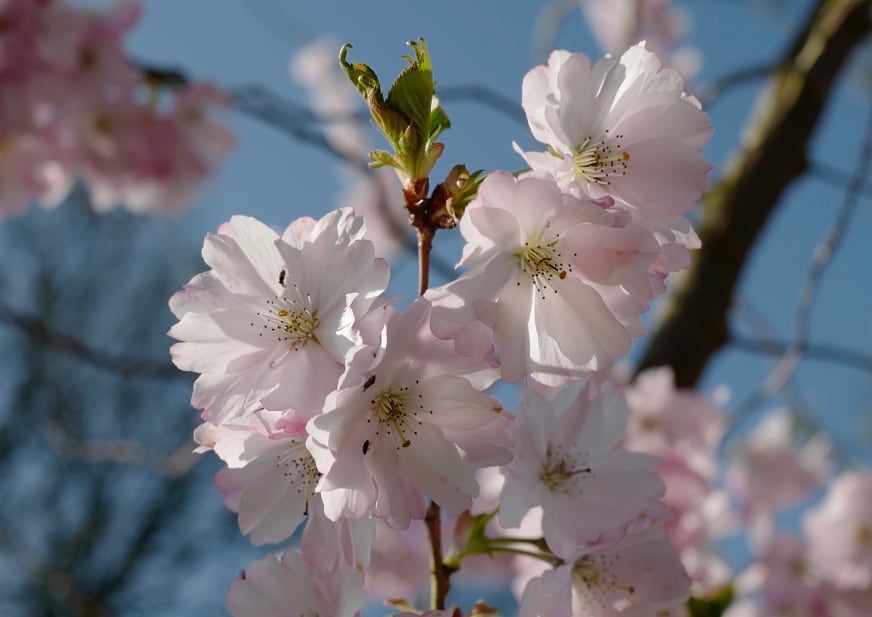
One of the major factors of fear is death; the older one grows, the more one is afraid of death. You know what is happening in the world; the older people are pretending to be very young because they are afraid of old age, disease and death, so to be free of fear one must understand death. And if you don't understand death, you can't possibly know what love and beauty are. We don't know love; we only know jealousy and pleasure and the beauty that's put together by man. We are talking of beauty in a totally different sense of that word. And therefore we must understand, not intellectually but actually, what it means to die. You know, it's only when a thing ends that there is a new beginning; whatever has continuity, goes on day after day, week after week, the same old repetition becomes tiresome and rather boring. It's only the thing which comes to an end that has a possibility of newness. After all, innocency is not a symbol - it is a fact. It is only the innocent mind that can see clearly, that can see something new. You may have looked at that flower by the roadside a hundred times, but if the mind and the eye of the mind are not innocent, you can't see the total beauty and the newness of that flower. That which has continuity cannot possibly be innocent.

Tags: death, innocence

Related Quotes
So, can you, while living, vigorous, active, end your attachment, end a particular habit voluntarily, easily, quietly?
What is death? Surely, it is the complete cessation of everything that you have known
Most of us are so weighed down by the known, by the yesterday, by the memories, by the `me', the `self', which is but a bundle of memories accumulated yesterday, having no actual existence in itself.
It requires an intense energy to stand alone.
Except for the human beings, it was a new day; nothing was like yesterday.
When you lose your relationship with nature and the vast heavens, you lose your relationship with man.
We have divided life into dying and living. And this division has brought about great fear. And out of that fear we invent all kinds of theories, very comforting, may be illusory, but it is very comforting, illusions are comfortably neurotic.
We are saying: Be dead to love; it doesn't matter. Live entirely in your intellect and in your verbal manipulations, your cunning arguments.
In Asia they believe in reincarnation; that is, the believer is born over and over again until in time he becomes perfect.
Death isn't some horrific thing, something to be avoided, something to be postponed, but rather something to be with day in and day out.
One has to find out the meaning of living, not merely giving an intellectual significance to it, but looking at what it means to live.
Creativeness is not a process of becoming or achieving, but a state of being in which self-seeking effort is totally absent.
It is one fact in life, we are all going to die. That is an absolute, irrevocable fact.
It is we human beings who are always concerned about death - because we are not living.
Is death merely the ending of the physical organism? Is that what we are afraid of? Is it the body that we want to continue? Or is it some other form of continuance that we crave?
Colour was god and death was beyond the gods.
The Christians have taken comfort in the idea of resurrection, and the Hindus and the Buddhists in a future life. Future life of what?
In what manner should one live one's daily life?"
What is death, what does it mean to die? - and that is an absolute certainty that we are all going to die, and what does that mean?
When you say to somebody `I love you', what does it mean?
It is a stupid person that wants to continue - no man who understood the rich feelings of life would want continuity.
It seems to me that our problems, whatever they are, can be dissolved totally only by burning away the process of will - which may sound completely foreign to a Western mind, and even to the Eastern mind.
We refuse to accept life as it is in fact.
The word 'innocence' means 'incapable of being hurt'.
Thought is the response of memory, experience, knowledge, the known, in the known is the 'me', though consciously I may not know the 'me' totally, the 'me' lives in this interval.
Do we know what love is? Never knowing it is the wonder of it, the beauty of it.
Is there time to overcome death; or is death always in harmony with life, with love, with pain; or is death something to be put far away, one day we have to face it but not now?
Can you invite death? Which means to end that which you have experienced, that which you have gathered, psychologically, so that you become totally inwardly anonymous, so that you are inwardly absolutely nothing?
Life is not what we would like it to be; life is not permanent at all.
Some people believe that the "I" has had a birth in the distant past and will continue in the future. It is irrelevant to me, it has no significance at all.
One never says. " Look, I am like this, let me find out why. Why does one have wounds, psychological bruises? Why does someone live with them?"
You cannot escape from experiences, but they need not take root in the mind.
There was complete emptiness of the brain, and the mind was free of all experience, the knowing of yesterday, though a thousand yesterdays have been.
Without innocence, it is impossible to be happy.
Most of us do not want to die to anything, particularly to that which gives us pleasure, to the memory of things that we have known and cherished.
It is only the innocent mind that can be spontaneous.
To look at a flower or a marvellous cloud, you must have a clear, unspotted eye, an eye that has lived and seen a thousand experiences and yet is free of all experience;
To understand truth, God, the unknown, or whatever name you care to give to it, mind and heart must come unprepared, insecure.